

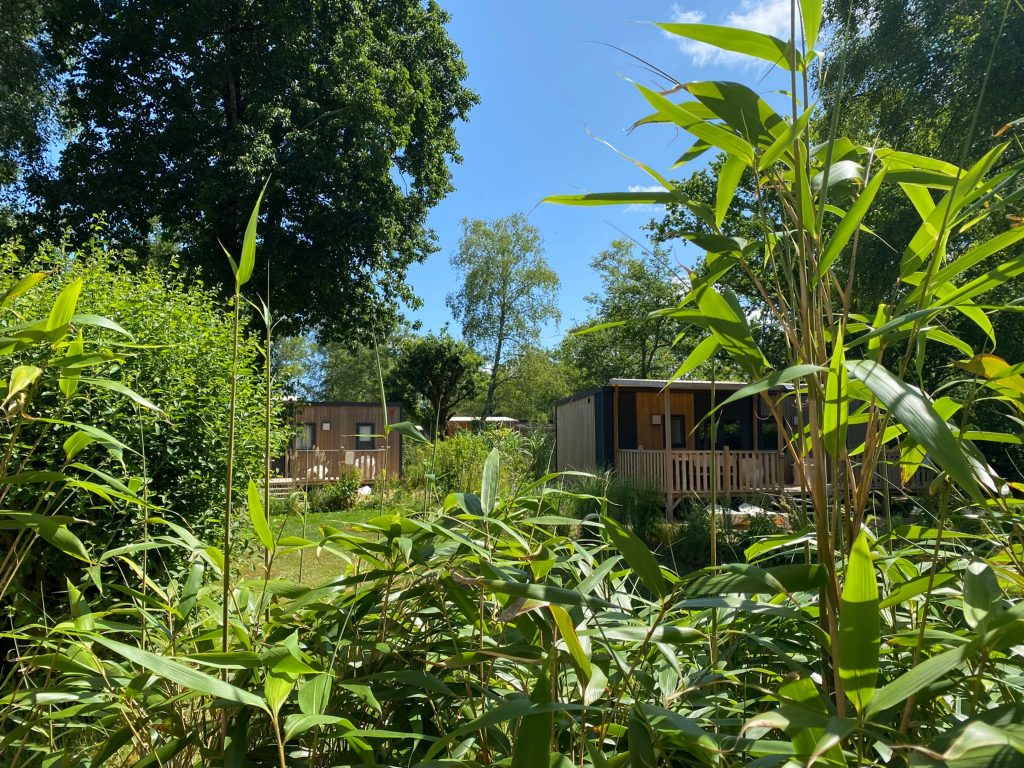
In Plougasnou, on the Bay of Morlaix, Domaine de Mesqueau combines 7 hectares of wooded parkland with a concrete environmental commitment. An LPO Refuge (French bird protection league) and the only EU Ecolabel campsite in the Bay of Morlaix (since June 2026), it works to protect biodiversity and reduce its consumption.
awarded in June 2026
since 2022
across the whole park
managed differently
Talking about nature is easy when you have a few trees and a sunset photo. Our approach is built on concrete choices: no more pesticides, protecting nesting periods, reducing consumption, making recycling easier and keeping spaces that suit wildlife.
Being awarded the EU Ecolabel in June 2026 gives this approach a demanding framework. Our commitment as an LPO Refuge since 2022 also helps us look at the park differently and adapt its upkeep to the species that live here.
Not everything is perfect or finished. The aim is to measure, correct and improve without asking guests to give up their comfort.
‘Protecting the Domaine does not mean freezing nature in place, but leaving it enough room to go on living.’

The public lake bordering Mesqueau and the nearby natural areas add to the richness of the landscape.
Our commitments focus on things we can genuinely control on site, rather than lining up promises that cannot be checked.
Pesticide-free management, plants suited to the Breton climate, areas left to grow wild and upkeep that respects nesting periods.
Water monitoring, flow restrictors, educational fittings, LED lighting and devices that cut unnecessary consumption.
Simple recycling, composting of organic waste and reuse of the animals’ bedding to enrich the Domaine’s soil.
The vegetable garden, mini farm and children’s workshops help everyone understand natural cycles through observation and experience.
Biodiversity is not protected by tidying every corner until it is sterile. Some hedgerows are not trimmed during nesting season. Some areas are deliberately left wilder. Brambles feed and shelter birds and small mammals while forming natural fences.
Nest boxes and shelters are installed in the park. Gaps are kept in some fences for hedgehogs. Less frequented areas also offer refuge to shyer wildlife.
Nest boxes and shelters
Hedgehog holes
Protected hedgerows
Wild areas
Brambles left in place
Suitable plants
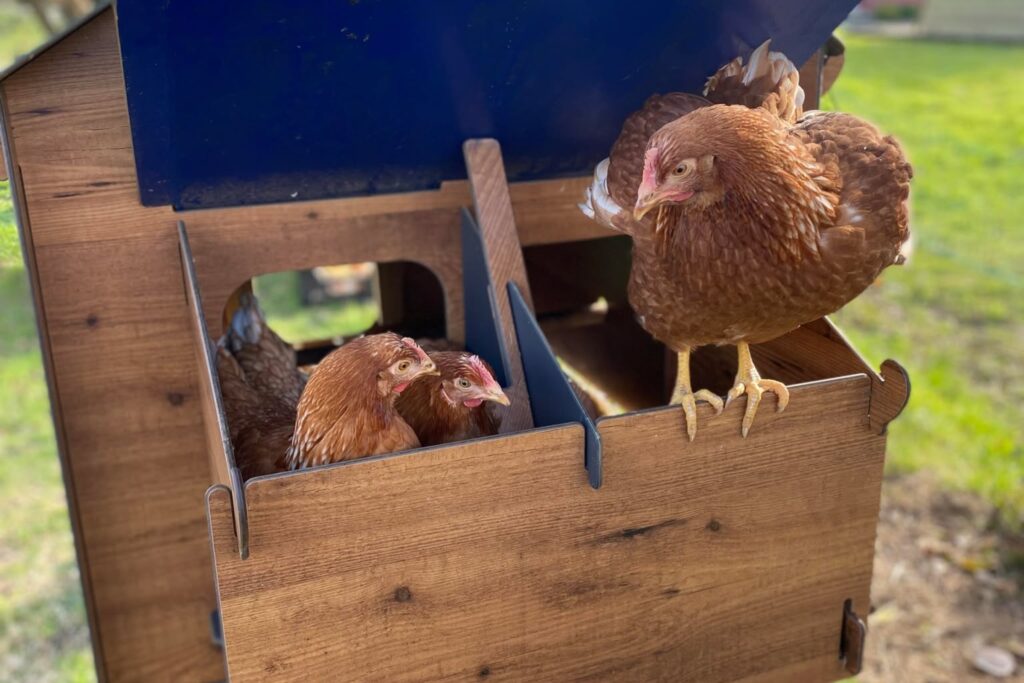
The hens, the goats and the educational vegetable garden make natural cycles easier to understand, especially for children. They are not just there for fun: they are part of composting and of life in the park.
Collected organic waste and the animals’ bedding go into the compost. Once broken down, this material returns to the soil and helps maintain the vegetable garden and planted areas.
During French school holidays, some kids’ club workshops introduce recycling, compost, the animals and the vegetable garden through age-appropriate activities.
Organic waste and bedding
Let the material break down
Return it to the soil and the garden
The aim is not to ask guests to time every move with a calculator in hand, but to avoid waste and make consumption more visible.
The installations make it possible to monitor consumption more regularly and spot anomalies more quickly.
✓ Meters read regularly
✓ Flow restrictors on sinks and washbasins
✓ Shower heads showing time and volume used
✓ Renewed water and drainage networks
Unnecessary consumption is limited by the equipment itself, without reducing holiday comfort.
✓ Key-operated power switches in the accommodation
✓ Heaters that detect open windows
✓ LED lighting across the Domaine
✓ Solar path lights that switch on when needed
Light pollution disrupts the movements and cycles of some nocturnal wildlife. Solar path lights and motion sensors keep the necessary paths lit while avoiding permanent, excessive lighting.
Energy-saving LED lighting
Targeted solar path lights
Motion sensors
Naturally darker areas
The Domaine provides the necessary facilities. Guests can join in easily, at their own pace, with no pressure during their holiday.
Use the recycling bins provided.
Report any leak or problem promptly.
Watch wildlife without disturbing its shelters.
Choose nearby walks, producers and sites.
Clear answers about the actions taken at Domaine de Mesqueau.
Awarded to the Domaine in June 2026, the EU Ecolabel is based on criteria covering water, energy, waste, purchasing and guest information, among others. It frames an approach that is measurable and regularly checked.
Since 2022, the Domaine has been committed to welcoming and protecting biodiversity better: nest boxes and shelters, hedgehog holes, wild areas left in place and no hedge trimming during nesting season.
No pesticides are used to maintain the 7 hectares. The Domaine favours mechanical methods, ecological grounds management and plants suited to the Breton climate.
Consumption is monitored regularly. Flow restrictors and educational shower heads are fitted, while renewed networks help limit leaks.
Collected organic waste can go into the compost along with the hens’ and goats’ bedding. The resulting material is then used to enrich the soil and the vegetable garden.
Yes. During French school holidays, some kids’ club workshops focus on the vegetable garden, the animals, compost, recycling and biodiversity.
Discover the cottages and mobile homes at Domaine de Mesqueau, set in wooded parkland 6 km from the nearest beaches of Plougasnou.
Choose whether to allow optional external content (map and virtual tour). You can refuse or change your choice at any time.